
How the Fish Shipping Process Impacts Quality in Ornamental Fish Export
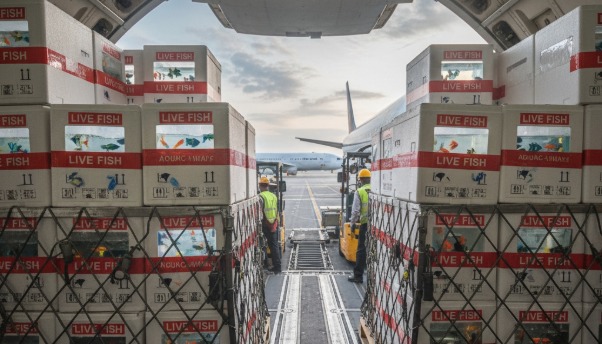
The success of any ornamental fish export business depends heavily on how fish are shipped from the exporter’s facility to their final destination. Even the healthiest and most vibrant fish can suffer stress, injury, or death if the fish shipping process isn’t properly managed. For African fish exporters, mastering this process is what sets reliable suppliers apart from the rest.In this article, we explore how the shipping process influences fish quality and why every step; from handling to delivery, plays a vital role in maintaining high live fish export quality.
Pre-Shipping Preparation: Setting the Stage for Success
The fish shipping process begins long before packaging. Exporters must ensure fish are well-conditioned, free of disease, and accustomed to captive water parameters. This involves:
- Fasting fish for 24–48 hours before shipment to reduce waste and ammonia buildup.
- Health screening to detect parasites or infections early.
- Water quality checks to ensure the shipping environment closely matches holding conditions.
By doing so, exporters improve live fish export quality and reduce mortality during transit.
The Importance of Oxygen and Water Quality
Marine ornamental fish require high oxygen levels to survive long flights. During packaging, each bag should contain at least one-third clean saltwater and two-thirds pure oxygen. Using oxygen tablets and water conditioners also helps maintain chemical stability.
Water temperature is another key factor. African exporters who deal with tropical species must monitor both ambient and shipping temperatures to prevent thermal shock.
Handling and Transport to the Airport
Rough handling before shipment can cause physical injuries or extreme stress in fish. Reputable African fish exporters use smooth, vibration-free vehicles with proper insulation to maintain water temperature.
Exporters also ensure minimal waiting times at customs and freight stations, every hour in a stressful environment can drastically lower fish survival rates.
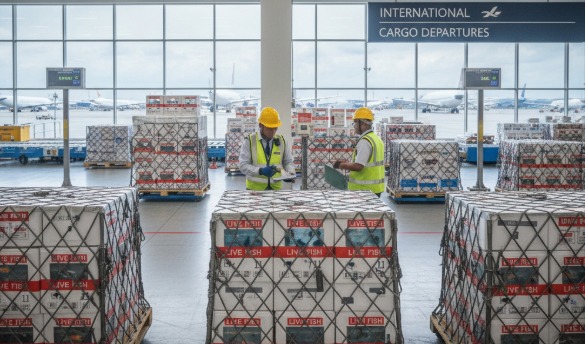
Air Freight and Transit Conditions
The air freight stage is the most sensitive part of the fish shipping process. Cargo holds experience pressure changes, turbulence, and temperature fluctuations. To minimize risk:
- Fish are packed in insulated Styrofoam boxes with temperature-control packs.
- Labels such as “Live Fish” and “This Side Up” help ensure proper handling by freight personnel.
- Exporters work closely with airlines that specialize in live animal cargo, ensuring smooth transitions at each checkpoint.
Such precautions uphold the exporter’s commitment to live fish export quality.
Arrival and Acclimatization
When fish reach their destination, retailers and transhippers must carefully acclimate them to their new environment. A gradual process of temperature and salinity adjustment prevents shock and enhances survival rates.
Professional exporters often include detailed acclimatization instructions in each shipment, helping importers handle fish correctly. This added step strengthens the exporter’s reputation for reliability and customer care.
Why a Short Supply Chain Improves Fish Quality
One of the biggest advantages African exporters can offer is a short supply chain—where fish move quickly from the ocean to the customer. This minimizes handling, reduces stress, and ensures fish arrive in excellent condition.
Companies like Bluefields Aquatics have perfected this system, becoming one of the most trusted names in ornamental fish export from Africa. Their streamlined logistics guarantee that every fish delivered is healthy, active, and ready for display or resale.
Conclusion
A well-managed fish shipping process is the backbone of high-quality ornamental fish export. From oxygen balance to careful handling and timely delivery, every detail affects the final outcome.
For African fish exporters aiming to build long-term global partnerships, maintaining exceptional live fish export quality through efficient shipping practices isn’t just a goal, it’s a standard.
Discover how packaging enhances this process in our main article: Why Excellent Packaging Is Essential in Ornamental Fish Export from Africa